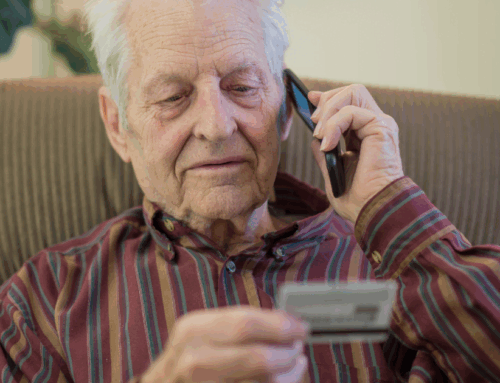
The Latest Scams Targeting Seniors and How to Stay Safe
- Some of the most serious scams targeting seniors today involve investment fraud, fake tech support, government and bank impersonation, romance scams, and family emergency schemes that may now use AI-generated voices.
- A major warning sign is urgency. Scammers often claim that money is at risk, a loved one is in trouble, or immediate payment is required, then pressure the person not to speak with anyone else.
- Never transfer money, share verification codes, buy gift cards or cryptocurrency, or provide financial information because of an unexpected call, text, email, or pop-up. Stop, verify the story independently, and involve someone you trust.
How Common Are Scams Targeting Seniors?
Scams targeting older adults are becoming more convincing, more personal, and, in some cases, much more costly.
The FBI received more than 201,000 internet crime complaints from people aged 60 and older in 2025, with reported losses totaling approximately $7.75 billion. Investment fraud accounted for about $3.5 billion of those reported losses, while tech and customer support scams accounted for roughly $1 billion.
Scammers are also using artificial intelligence, social media, text messages, fake security alerts, and impersonation tactics to make familiar schemes harder to recognize.
Understanding how these scams work can help older adults, families, and caregivers slow down before money or personal information is lost.
AI Voice Cloning Is Changing the Family Emergency Scam
The scam targeting grandparents is not new, but artificial intelligence has made it more convincing.
A scammer may call pretending to be a grandchild, child, or another close relative who has been involved in an accident, injured, stranded, or arrested. Instead of relying only on a convincing story, scammers can now use AI voice-cloning technology to imitate a real person’s voice.
The Federal Trade Commission warns that scammers can use a short audio clip, sometimes taken from content posted online, to clone a loved one’s voice and make an emergency call sound real.
That’s why you shouldn’t rely on recognizing the voice as proof. If a loved one calls unexpectedly asking for money, the best approach is to hang up and call that person using their standard phone number. If you cannot reach them, contact another family member who can verify the story.
Families can also agree on a private word or question that can be used when something feels suspicious.
The New Version of the Bank and Government Impersonation Scam
One of the most concerning fraud trends begins with a message that appears designed to protect you.
A caller, text, email, or computer alert may claim that your bank account has been hacked, your identity has been stolen, or your Social Security number is connected to a crime. The scammer may pretend to work for a bank, technology company, law enforcement agency, or government office.
Then comes the supposed solution.
You are told to transfer your savings, retirement funds, or investments to a secure account to protect them. Some scammers direct victims to cryptocurrency ATMs, while others demand cash, wire transfers, or even gold.
The money is not being protected. It’s being stolen.
The FTC found that reports from adults aged 60 and older who lost at least $10,000 to business and government impersonation scams increased more than fourfold between 2020 and 2024. Reported losses exceeding $100,000 have risen even more sharply.
A simple rule can stop many of these financial exploitation attempts.
If someone tells you to move or transfer your money to “protect it,” it’s a scam.
Tech Support Scams Remain a Major Threat
A warning suddenly appears on the computer screen saying the device has been infected or that you have a compromised account. A phone number appears underneath with instructions to call immediately.
This is a common opening for a tech support scam.
The person answering may claim to work for Microsoft, Apple, a bank, or another familiar company. They may request remote access to the computer, ask for financial information, or claim that money must be transferred to resolve the problem.
Tech and customer support scams remain one of the most costly fraud categories affecting older adults. According to the FBI’s 2025 IC3 Annual Report, adults aged 60 and older reported approximately $1 billion in losses from tech and customer support scams.
Do not call a number displayed in an unexpected pop-up, and do not give a stranger remote access to a computer or phone.
Close the window if possible, then contact the company through its official website or a trusted support number.
Investment and Romance Scams Can Develop Slowly
Not every scam begins with panic. Some begin with friendship.
A stranger may start a conversation through Facebook, Instagram, a dating app, or another online platform. Over time, the person builds trust and eventually introduces an investment opportunity, cryptocurrency platform, financial emergency, or request for money.
That slow approach can make these scams especially difficult to recognize.
Investment fraud produced the largest reported losses among adults over 60 in the FBI’s 2025 data at approximately $3.5 billion. Confidence and romance scams accounted for another $584 million in reported losses.
Be cautious when someone you have met only online begins discussing money, investments, cryptocurrency, loans, or financial emergencies. A relationship should never require secrecy about finances.
Package Delivery Texts Are Designed to Get a Click
A text arrives saying a USPS, FedEx, or other delivery could not be completed. Perhaps postage is due or an address needs to be updated.
The link may lead to a website that looks almost identical to the real delivery company.
These fake delivery messages are designed to collect credit card numbers, addresses, passwords, and other personal information.
Instead of clicking the link, check the order through the retailer where the purchase was made or enter the tracking number directly on the delivery company’s official website.
Other Common Scams Targeting Older Adults
Scammers constantly change the story they use, but many familiar schemes are still active. Older adults and their families should also watch for:
- Medicare and health insurance scams that ask for Medicare numbers or other personal information, sometimes in exchange for supposedly free equipment, services, or benefits.
- Prize, lottery, and sweepstakes scams that claim you have won something but require a fee, tax payment, or banking information before you can collect it.
- Fake charity scams that use disasters, illnesses, veterans, or other emotional causes to pressure people into donating quickly.
- Funeral and bereavement scams that exploit publicly available information about a death to target grieving spouses or family members.
- Phishing emails and text messages that impersonate banks, retailers, delivery companies, or government agencies and direct you to fake websites.
- Online shopping and non-delivery scams where a product is advertised, payment is taken, and the item never arrives.
- Fake check and overpayment scams where someone sends a fraudulent check, asks you to return part of the money, and leaves you responsible when the check is later rejected.
Learn to Recognize the Pattern Behind the Scam
The story may change, but the pressure tactics are often remarkably similar.
Scammers create urgency so there is little time to think. They may insist that something terrible will happen if you do not act immediately, demand secrecy, discourage you from calling family, or tell you that normal banking procedures must be avoided.
Payment requests are another major warning sign. Be suspicious of anyone who unexpectedly asks for gift cards, cryptocurrency, wire transfers, cash, gold, or access to a bank account.
Verification codes should also stay private. A code sent by a bank or other account provider is meant for the account holder. Someone asking you to read that code over the phone may be trying to access the account.
Most importantly, give yourself permission to stop the conversation.
A legitimate organization will allow you to hang up, verify the information, speak with family, and call back through an official number.
What to Do if You Think a Scam Has Already Happened
Act quickly, but do not let embarrassment stop you from asking for help.
Contact the bank, credit card company, investment firm, or payment service involved as soon as possible. Ask whether the transaction can be stopped, recalled, or flagged as fraudulent.
Change compromised passwords, secure affected accounts, and save texts, emails, receipts, phone numbers, transaction records, and other evidence.
Internet-enabled fraud can be reported to the FBI’s Internet Crime Complaint Center, and other fraud can be reported to the Federal Trade Commission. The FBI also recommends contacting financial institutions promptly and keeping original records connected to the scam.
Being targeted by a skilled scammer is not a reason for shame. Modern fraud operations are designed to create fear, urgency, trust, and confusion. Speaking up quickly gives families and financial institutions a better opportunity to respond.
How Families and Caregivers Can Help Protect Older Adults
Fraud prevention works best when older adults have someone they feel comfortable calling before making an unfamiliar financial decision.
Talk about scams before there is a crisis, and make it clear that asking for a second opinion will never lead to criticism or embarrassment. The goal is not to take away independence, but to create another layer of protection.
Families can also take several practical steps:
- Create a verification rule for unexpected money requests. Agree that any urgent request from a relative, bank, government agency, or company will be independently verified before money is sent.
- Choose a trusted financial contact. The Consumer Financial Protection Bureau recommends considering a trusted contact at a bank or credit union who can be contacted if the institution sees signs of possible financial exploitation.
- Turn on banking and credit card alerts. Alerts for large purchases, transfers, withdrawals, or account changes can help unusual activity get noticed sooner.
- Use two-factor authentication. Adding another layer of authentication makes it harder for someone with a stolen password to access an account. Never share a one-time verification code with an unsolicited caller.
- Use call-blocking and spam-labeling tools. These services can reduce unwanted calls, although no system catches every scam.
- Register phone numbers with the National Do Not Call Registry. This can reduce legitimate telemarketing calls and make suspicious calls easier to recognize, but the registry does not stop scammers who are already breaking the law.
- Protect Medicare information. Review Medicare claims for services that were not received, and do not share a Medicare number with an unsolicited caller.
- Consider a credit freeze when appropriate. A credit freeze is free and can make it harder for an identity thief to open new credit accounts in someone else’s name.
- Keep sensitive documents secure. Shred financial records, medical documents, and other papers containing personal information when they are no longer needed.
- Pay attention to behavioral warning signs. Sudden anxiety around money, repeated calls from strangers, unexplained gift card purchases, unusual withdrawals, or secrecy about a new online relationship may deserve a closer look.
Fraud by strangers is only one form of financial exploitation. When money, property, or access is being misused by a relative, acquaintance, or trusted caregiver, families should also know the warning signs of elder financial abuse.
Helping Older Adults Stay Safe at Home
Protecting an aging loved one involves more than physical safety. It also means having trusted people around who notice when something does not look right.
A professional caregiver may notice an unusual caller repeatedly contacting a client, a suspicious package or letter, sudden anxiety about money, or a request that seems inconsistent with the person’s usual routine. These everyday observations can give families an opportunity to ask questions before a situation becomes more serious.
At New Wave Home Care, we support older adults and families in Pasadena, the greater Los Angeles area, and communities throughout Southern California with compassionate in-home care built around safety, dignity, independence, and connection.
If your loved one could benefit from additional support at home, contact New Wave Home Care to learn how personalized care can provide another trusted layer of support for your family.
[/fusion_text][/fusion_builder_column][/fusion_builder_row][/fusion_builder_container]